At a glance
What it is
Pain from the small paired facet joints at the back of the spine — anywhere from the neck to the low back — usually caused by whiplash, arthritis, or degenerative change.
How we diagnose it
Anaesthetic block of the medial branch nerves that supply the joint. If the pain drops by more than 50%, the diagnosis is confirmed.
How we treat it
Radiofrequency ablation of the medial branch nerves for lasting relief once the diagnostic block is positive.
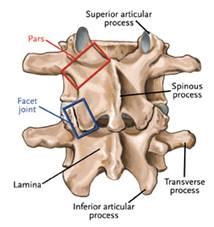
What facet joints are
Facet joints are the small paired joints between two vertebral bones. They sit at the back of the spine and run from the neck all the way down to the low back. They can become painful after a whiplash injury of the neck, from arthritis, or from degeneration in the low back. Facet-joint pain is often felt in and around the spine and can markedly limit how a patient uses their neck or back.
When facet joints are painful, bending the spine backward or sideways becomes difficult.
How the diagnosis is confirmed
Each facet joint is supplied by medial branch nerves. If these nerves are blocked with local anaesthetic and the pain stops, the diagnosis is confirmed — this is the only definitive test that tells the clinician the pain is coming from the facet joint itself.
Once the block is positive (more than 50% pain relief), radiofrequency ablation of the medial branches provides lasting pain relief.
Book a consultation
The secretary schedules first appointments during clinic hours; please have prior imaging, operative notes and a current medication list available at the time of the call.
This page provides general information about facet joint pain syndrome and is not a substitute for individual medical assessment. If your symptoms are severe or worsening, contact a clinician promptly.