What is fibromyalgia?
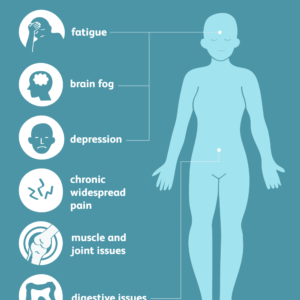
Fibromyalgia is a complex condition characterized by widespread muscle pain. This chronic pain affects a patient’s bones and muscles, and results in an array of other symptoms. Some researchers believe that fibromyalgia increases the body’s pain sensations by affecting the brain’s way of processing pain signals. For those suffering from fibromyalgia, the brain’s pain receptors tend to remember the pain signals, which eventually causes an overreaction to pain signals down the road. Fibromyalgia can affect many different areas of the body, and often affects multiple areas at once.
Muscles make up most of the human body and play an active role in movement, balance, and coordination, whether voluntary or automatic. Myofascial pain results from stress or damage to a muscle or fascia and is often overlooked despite being a major cause of pain and dysfunction in the body.
The muscles and fascia are among the most parts of the body exposed to wear and tear and damage. However, healthcare professionals tend to focus on bones, discs, or nerves. This bias needs to change. As a specialist in these pains, I consider myofascial pain the most common with its devastating effects on pain mechanisms and economic losses, making it urgent to learn not only for pain patients and doctors but also for the public.
What are trigger points?
Any myofascial trigger point is a small area of irritation in a muscle or fascia that causes pain. Each myofascial trigger point can be either active or latent.
An active trigger point produces pain even at rest and again with any movement that stretches the muscle. An active trigger point is always sensitive; it is felt as a taut bundle between muscle fibers. The muscle is usually weak and produces a “twitch response” when touched directly.
A latent trigger point does not cause pain during normal daily activities but only causes pain when touched. Additionally, it can limit range of motion such as difficulty bending.
Patients who come to pain clinics often ask, “I have been suffering from this pain for years now! Why wasn’t I diagnosed with myofascial pain before this?”
The answer to this question is that this field requires expertise. Myofascial pain is best diagnosed by doctors who are well educated in myofascial pain. A thorough medical history and physical examination, especially of the muscles and myofascial trigger points, is very necessary for diagnosis.
Some facts about myofascial pain
- Routine X-rays, electromyography (EMG), or MRI imaging studies do not give specific clues to myofascial pain.
- Pain caused by myofascial trigger points is aggravated by wet, cold, or dry weather, overuse or excessive activity beyond normal, stress, anxiety, or depression.
- Poor sleep is also common in myofascial pain. In response to the question “Do you sleep well?”, 66% of patients describe their sleep as poor. However, 80% of patients complain of “morning fatigue”. Poor sleep may indicate difficulty sleeping, frequent waking, light sleep, increased dreaming, and morning fatigue.
- Approximately 85% of patients with myofascial pain complain of “general fatigue”. Some patients describe this as exhaustion, fatigue, general weakness. This fatigue is aggravated by normal activity and can cause significant disruption in daily activities.
- Pain caused by myofascial pain in the trapezius muscle can present itself to the doctor in different ways. The most common symptoms are related to the neck, shoulders, upper extremities, lower back, and even lower extremities.
- Myofascial pain can also manifest itself as ear pain, tinnitus, nausea, dizziness, tingling, or headache.
- Some patients with myofascial trigger points suffer from the following symptoms. They are unable to chew or open their mouth wide, and their teeth are sensitive to temperature. They may be diagnosed with migraine, while the pain may be coming from trigger points in the neck muscle fascia.
- Neck muscles are broadly and frequently responsible for causing headaches. Patients diagnosed with “migraine headache” and treated unsuccessfully with a long list of painkillers or migraine medications. Often, examination reveals that the patient’s pain originates from trigger points in the neck muscles.
The most important part of treatment is making the patient understand that the pain they suffer from is not from a pinched nerve or inflamed joint. It does not come from inflamed tendons or bursae, but originates from their muscles. Most importantly, reassure patients that trigger point pain can be treated with appropriate therapy.
Treatment involves multimodal therapy. This treatment may begin by identifying factors that perpetuate and worsen pain. Then the doctor may need to inject the trigger point, block the nerve, and use non-narcotic pain medications. Of course, since the problem involves every aspect of the patient’s life, the pain doctor will treat patients as a whole by managing sleep disorders and then assisting in neuromuscular adaptation and natural rehabilitation to increase muscle strength, endurance, and flexibility. Finally, the spiritual aspects of the problem may be addressed; secondary depression is relieved and perception is enhanced through meditation, while stress and anxiety are resolved through supportive psychotherapy.
How is Fibromyalgia Treated?
One of the best techniques for managing fibromyalgia pain and aches is with self-care. By ensuring that you get enough rest, eat a healthy diet, exercise regularly, and maintain an overall healthy lifestyle, you can minimize the impact that fibromyalgia has on your health and your life. Yoga and massage therapy can also help reduce its symptoms.
At Alimran Medical Center, we may recommend any of the following treatments:
Chiropractic
Steroid injection
- Trigger point injections
- Epidural steroid injections
- Transforaminal injections
However, the recommended treatment will vary by patient depending on your specific symptoms.