At a glance
What it is
A non-surgical spinal decompression system that targets damaged disc segments and gently separates the vertebrae to relieve pressure on the disc and nerve root.
What it treats
Cervical and lumbar disc bulge or herniation, radicular pain, and back or neck pain that has not responded to conservative care — including pain persisting after failed back surgery.
Course structure
20–25 sessions, 30 minutes each, typically 3–5 times per week over 4 to 6 weeks. Sessions are safe, painless, and cumulative in effect.
Why disc pain is different
Lower back and neck pain can often be managed with conservative options such as physical therapy, chiropractic care, or pain management. Disc pain, however, is frequently more stubborn — and for many patients, treating the underlying disc problem is the only reliably effective way to resolve it.
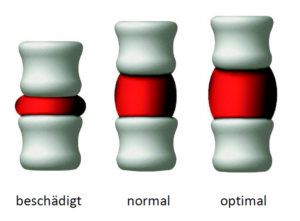
With daily activity, the intervertebral discs are constantly compressed and loaded, and they gradually degenerate. As a disc breaks down, the gel-like nucleus loses hydration and the disc loses height. The flexible outer ring becomes more brittle and prone to fissures, which can lead to a bulge or herniated disc. A bulging or herniated disc often presses on the spinal nerves, causing severe pain and radicular symptoms down the arm or leg.
Damaged discs rarely heal on their own because they remain under constant load, even when the patient feels comfortable at rest. The most effective way to help a disc recover is to reduce the pressure inside it.
How SpineMED works
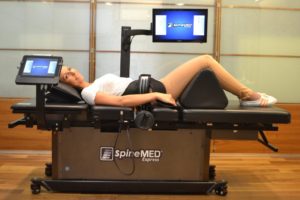
The SpineMED system relieves pressure by stabilising the spine and applying controlled traction without triggering the reflexive muscle contractions or spasms that conventional traction devices tend to provoke.
The device monitors the load applied to the patient every 2.5 seconds and adjusts the tension every 20 seconds to keep the treatment within the therapeutic window. This ability to sense and correct the tension in near-real time is what distinguishes SpineMED from older traction devices and traditional decompression tables.
The point of decompression
The goal of decompression is to let fluid, nutrients, and oxygen flow back into the disc. This nutrient exchange supports the body's own repair mechanisms, speeding recovery and, over a full course, healing damaged discs.
Reducing intradiscal pressure can also help draw the herniated or bulging nucleus back toward the centre of the disc, easing pressure on the nerve root and relieving the associated pain or numbness.
What SpineMED is used for
SpineMED is included in the treatment plan for a range of spinal problems:
- Cervical or lumbar disc slippage without surgery — helping restore a large proportion of the disc back to its natural position - Restoring the correct spacing between affected vertebrae - Reducing nerve inflammation caused by vertebral compression, by improving local blood flow and lowering pain in the region - Back and neck pain, without reliance on analgesics or muscle relaxants — improving the state of the nerves and muscles of the cervical and lumbar spine - Deformities and curvatures of the spine in their various forms - Pain from a bulging or herniated disc that has persisted more than four weeks - Recurrent pain following failed back surgery of more than six months' duration
How the sessions are structured
A full SpineMED course consists of 20 to 25 sessions of 30 minutes each. The sessions are safe and painless, and each one has a cumulative effect designed to progressively reduce pain over the course.
Sessions are typically scheduled 3 to 5 times per week over a 4 to 6 week period.
During the session we help the patient stay relaxed — listening to music or watching a favourite film — while the treatment progresses on the table.
Need more information?
Reach out to our team for more details about the topics covered in this article.
This article provides general information and is not a substitute for professional medical advice. If you have specific health concerns, please consult with a healthcare provider.