At a glance
What it is
Inflammation of the sheath surrounding two tendons that run from the wrist to the base of the thumb, restricting their smooth movement.
Symptoms
Pain and swelling at the base of the thumb; difficulty gripping or pinching; a sticking or stop-and-go sensation when moving the thumb.
Approach
Splinting and activity modification first. Corticosteroid injection into the tendon sheath is highly effective. Physiotherapy and ozone injection for persistent cases.
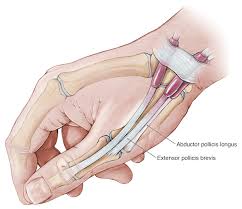
What De Quervain's tenosynovitis is
De Quervain's tenosynovitis is a painful condition affecting two tendons on the thumb side of the wrist. These tendons normally glide smoothly through a small tunnel as you grip, grasp, or pinch. Repetitive hand or wrist movements irritate the sheath surrounding them, causing it to thicken and swell — which restricts tendon movement and produces pain.
Although the exact cause is not always clear, chronic overuse of the wrist is the most common factor. Activities like gardening, playing golf or racket sports, and lifting a baby are commonly associated with it.
**Symptoms:** - Pain and swelling near the base of the thumb - Difficulty gripping or pinching - A "sticking" or "stop-and-go" sensation when moving the thumb - Pain spreading into the thumb or forearm if untreated
**Other causes:** Direct injury to the wrist or tendon; inflammatory arthritis such as rheumatoid arthritis.
**First aid measures:** Immobilise the thumb and wrist with a splint; avoid repetitive thumb movements; apply ice to the area.
Treatment options at Alimran Medical Center
Injection therapies
- Corticosteroid injection into the tendon sheath
- Ozone injection
- Prolotherapy
Advanced therapies
Physiotherapy
- Electrical stimulation
- Short and long wave therapy
- Laser therapy
- Ultrasound therapy
- Magnetic therapy
- Therapeutic exercises
Book a consultation
The secretary schedules first appointments during clinic hours; please have prior imaging, operative notes and a current medication list available at the time of the call.
This page provides general information about de quervain's tenosynovitis and is not a substitute for individual medical assessment. If your symptoms are severe or worsening, contact a clinician promptly.