At a glance
What it is
Compression of the lateral femoral cutaneous nerve — a pure sensory nerve supplying the outer thigh — causing pain and sensory changes. Also called Bernhardt-Roth syndrome.
Symptoms
Burning, tingling, or numbness on the outer and upper thigh. Worse with prolonged standing or walking. More sensitive to light touch than deep pressure.
Approach
Conservative measures first (loose clothing, weight management). Nerve blocks and injections for persistent cases; surgery is rarely needed.
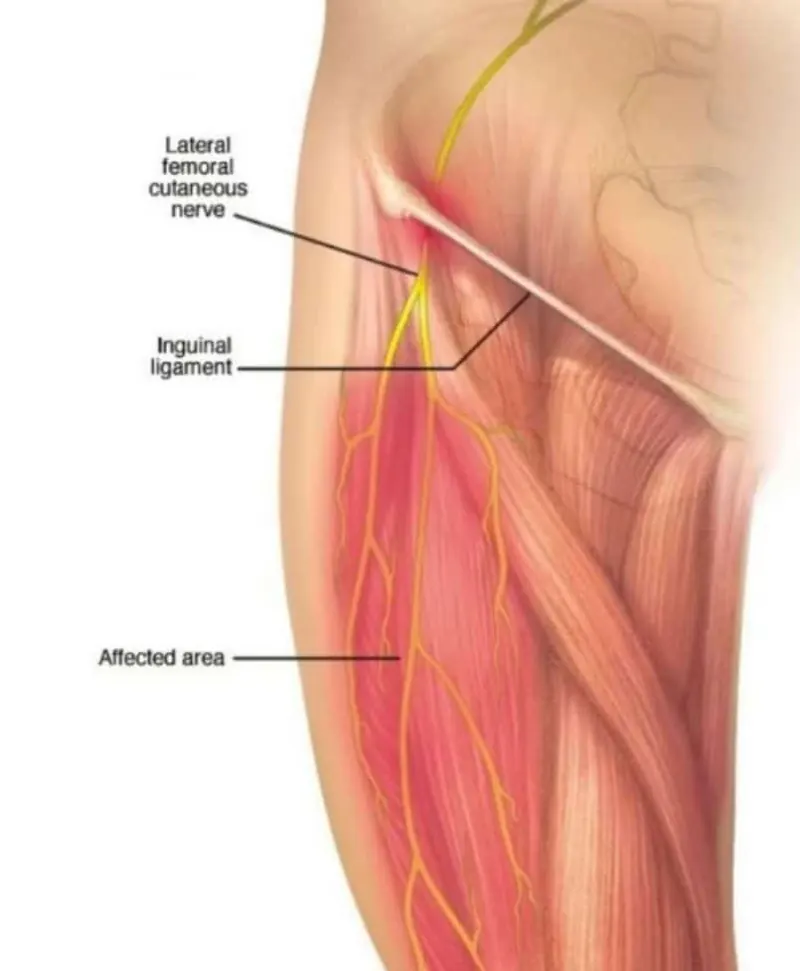
What meralgia paresthetica is
Meralgia paresthetica occurs when the lateral femoral cutaneous nerve — a pure sensory nerve with no motor function — is compressed or entrapped. This nerve branches from the lumbar plexus, passes through the pelvis and groin via the inguinal ligament, and provides sensation to the front and outer surface of the thigh.
When compressed, it produces burning, tingling, or numbness along the outer thigh, often on one side. Symptoms typically worsen after prolonged standing or walking. Because the nerve is sensory only, muscle weakness is not a feature.
**Common causes:** - Tight clothing such as belts, corsets, or tight trousers - Obesity or significant weight gain - Pregnancy - Hip injury - Repetitive leg movements - Scar tissue near the inguinal ligament from prior injury or surgery
In many cases symptoms improve within a few months. Conservative measures — wearing loose clothing and managing weight — are tried first. When these are not enough, targeted treatments are available.
Treatment options at Alimran Medical Center
Injection therapies
- Nerve block injection
- Trigger point injections
- Epidural steroid injections
- Ozone injection
- Prolotherapy
Advanced therapies
Physiotherapy & rehabilitation
- Electrical stimulation
- Short and long wave therapy
- Laser therapy
- Ultrasound therapy
- Magnetic therapy
- Therapeutic exercises
- SpineMED® system
- Sigma
Book a consultation
The secretary schedules first appointments during clinic hours; please have prior imaging, operative notes and a current medication list available at the time of the call.
This page provides general information about meralgia paresthetica and is not a substitute for individual medical assessment. If your symptoms are severe or worsening, contact a clinician promptly.