At a glance
What it is
An overuse injury of the Achilles tendon — the band of tissue connecting the calf muscles at the back of the lower leg to the heel bone.
Who gets it
Runners who suddenly increase intensity or distance, and middle-aged people who play tennis, basketball or similar sports only on weekends.
Outlook
Most cases settle with simple at-home care under a doctor's supervision. Severe cases can progress to a tendon rupture that may need surgical repair.
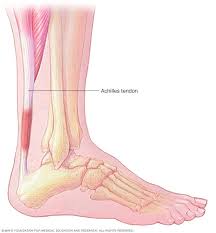
Symptoms
The pain usually begins as a mild ache at the back of the leg or just above the heel after running or other sports activity. More severe episodes can follow prolonged running, stair climbing, or sprinting.
Tenderness and stiffness are also common — most noticeable first thing in the morning, and typically easing with light activity.
Causes
Achilles tendinitis is caused by repetitive or intense strain on the tendon, which is loaded every time you walk, run, jump, or push up onto your toes.
The tendon's structure weakens with age, making it more vulnerable to injury — particularly in people who play sports only on weekends, or who suddenly step up the intensity of their training.
Risk factors
A number of factors raise the risk of Achilles tendinitis:
- **Sex.** It occurs most commonly in men. - **Age.** Incidence rises with age. - **Physical factors.** A naturally flat foot arch, obesity, and tight calf muscles all place extra strain on the tendon. - **Training choices.** Running in worn-out shoes, running in cold weather, and running on hilly terrain all increase the risk. - **Medical conditions.** People with psoriasis or high blood pressure are at higher risk. - **Medications.** A class of antibiotics called fluoroquinolones has been associated with higher rates of Achilles tendinitis.
Complications
Chronic tendinitis weakens the Achilles tendon and makes it more vulnerable to a full tear (rupture) — a painful injury that usually requires surgical repair.
Treatment
Tendinitis usually responds well to self-care measures. When the signs and symptoms are severe or persistent, further options are considered.
If over-the-counter pain medications — such as ibuprofen or naproxen — are not enough, stronger anti-inflammatory medication may be prescribed to reduce inflammation and relieve pain.
Treatment options at Alimran Medical Center
Depending on the severity and duration of symptoms, we may recommend any of the following:
Injections and interventional treatments
Complementary therapies
Physiotherapy
Delivered alongside other treatments as part of a structured plan.
Need more information?
Reach out to our team for more details about the topics covered in this article.
This article provides general information and is not a substitute for professional medical advice. If you have specific health concerns, please consult with a healthcare provider.