At a glance
What it is
Death of bone tissue caused by interrupted or reduced blood supply to the bone. Also called osteonecrosis. Without blood flow, the bone develops microfractures and can ultimately collapse. Most commonly affects the hip in adults aged 30–60.
Symptoms
Often asymptomatic early. As the condition progresses: joint pain when bearing weight, eventually pain even at rest. In the hip, pain centres on the groin, thigh, or buttock. Can also affect the shoulder, knee, hand, and foot.
Approach
Goals are to relieve pain, preserve joint function, and slow bone damage. Best treatment depends on disease stage, location, and amount of bone affected. Physiotherapy, injection therapies, and pain management are the non-surgical options.
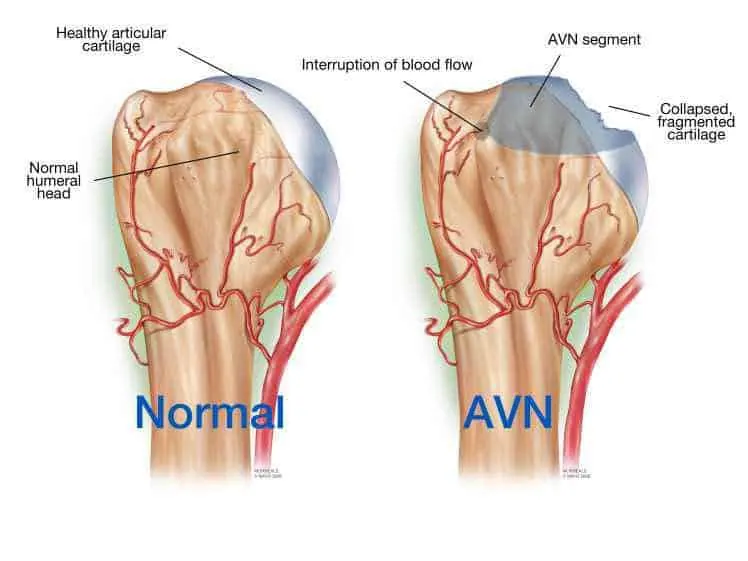
What avascular necrosis is
Avascular necrosis (AVN) occurs when blood flow to a section of bone is interrupted or substantially reduced. Without adequate blood supply, bone cells begin to die. Over time, the affected bone develops tiny fractures (microfractures) that eventually cause structural collapse. The collapsed bone surface then causes severe arthritis in the adjacent joint.
The hip is the most commonly affected site. Avascular necrosis can also develop in the shoulder, knee, hand, and foot. It can occur on both sides simultaneously (bilateral) — for example, in both hips or both knees.
**Causes:** - **Trauma** — a fractured bone or dislocated joint can directly damage the blood vessels supplying the bone. Radiation treatment for cancer can also weaken bone and harm blood vessels. - **Fatty deposits in blood vessels** — lipids can block small vessels, reducing bone blood flow. This is the mechanism behind steroid-induced and alcohol-related AVN. - **Long-term high-dose corticosteroid use** — one of the most common causes; the exact mechanism involves fat emboli and direct toxic effects on bone cells. - **Excessive alcohol intake** — similarly causes fatty changes in blood vessels. - **Systemic diseases** — sickle cell anaemia, Gaucher's disease, and systemic lupus erythematosus are associated with AVN. - **Idiopathic** — in about 25% of cases, no cause is identified.
**Symptoms** evolve gradually: - Early: no symptoms - Middle: pain when bearing weight on the affected joint - Late: pain at rest, including when lying down; severe limitation of movement
Treatment outcome is best when AVN is diagnosed early, before significant bone collapse occurs.
Treatment options at Alimran Medical Center
Injection therapies
- Steroid injections
- Ozone injection
- Prolotherapy
Advanced therapies
Physiotherapy & rehabilitation
- Electrical stimulation
- Short and long wave therapy
- Laser therapy
- Ultrasound therapy
- Magnetic therapy
- Therapeutic exercises
- Sigma
Book a consultation
The secretary schedules first appointments during clinic hours; please have prior imaging, operative notes and a current medication list available at the time of the call.
This page provides general information about avascular necrosis and is not a substitute for individual medical assessment. If your symptoms are severe or worsening, contact a clinician promptly.