At a glance
What it is
A common condition in which the arch of the foot is flattened, allowing the entire sole to touch the floor when standing. Often painless; no treatment is needed unless symptoms arise.
When it causes problems
Heel or arch pain that worsens with activity, inner ankle swelling, and altered leg alignment that strains the ankles and knees.
Approach
Arch supports, supportive footwear, and stretching exercises for mild cases. Physiotherapy and targeted orthotics for active runners or persistent pain.
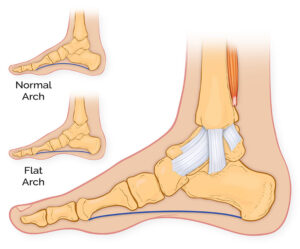
What flatfeet is
Flatfeet (pes planus) occurs when the arch on the inside of the foot is absent or collapses, allowing the entire sole to contact the ground when standing. It is a common and usually painless condition.
**How it develops:** - A flat foot is normal in infants and toddlers; arches typically develop during childhood. - Some children have flexible flatfoot — the arch appears when sitting or standing on tiptoe but disappears when standing normally. Most outgrow this without problems. - In adults, arches can fall over time as the tendon running along the inside of the ankle weakens through years of wear.
**Risk factors:** Obesity, foot or ankle injury, rheumatoid arthritis, diabetes, and aging.
**When it causes symptoms:** Most people with flatfeet have no pain at all. When pain does occur, it typically affects the heel or arch and worsens with activity. Swelling along the inner ankle and altered leg alignment contributing to knee problems can also occur.
No treatment is necessary if flatfeet are painless.
Treatment options at Alimran Medical Center
Conservative measures
- Custom or over-the-counter arch supports (orthotic devices)
- Structurally supportive footwear
- Achilles tendon stretching exercises
Physiotherapy
- Electrical stimulation
- Short and long wave therapy
- Laser therapy
- Ultrasound therapy
- Gait analysis and technique correction
- Therapeutic exercises
Book a consultation
The secretary schedules first appointments during clinic hours; please have prior imaging, operative notes and a current medication list available at the time of the call.
This page provides general information about flatfeet and is not a substitute for individual medical assessment. If your symptoms are severe or worsening, contact a clinician promptly.