At a glance
What it is
A bony growth (osteophyte) on the underside of the heel, caused by chronic strain on the plantar fascia — the tendon forming the arch of the foot.
Symptoms
Sharp pain under the heel on first steps out of bed or after sitting. Walking often eases the pain to a dull ache, but exercise or long walks make it worse.
Approach
Rest, ice, and orthotic insoles first. Physiotherapy, corticosteroid injections, ozone, and radiofrequency for persistent cases.
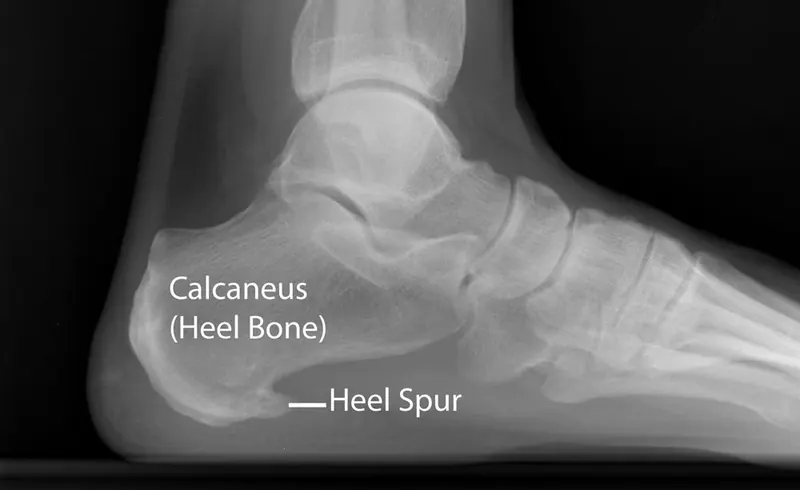
What a heel spur is
A heel spur is a bony growth on the underside of the heel bone (calcaneus). The underlying cause is usually plantar fasciitis — inflammation of the plantar fascia, the tendon that forms the arch of the foot from heel to sole.
Interestingly, the bony spur may be present for years without causing pain. In some people, pain appears suddenly without apparent reason after a long pain-free period.
**Symptoms:** Sharp pain under the heel on the first steps of the morning or after prolonged sitting. Walking often transitions the pain to a dull ache. Physical activity and long walks aggravate the condition. Swelling around the heel is possible.
**Causes:** Chronic, excessive pressure on the sole of the foot — from incorrect gait (particularly over-pronation, where the foot rolls inward and the arch collapses), weight gain, aging, or occupations requiring prolonged standing on hard floors. Usually a combination of these factors is responsible.
**Conservative first steps:** Rest from aggravating activities; apply ice packs (5–10 minutes); anti-inflammatory medication; orthotic insoles to correct over-pronation; daily stretching exercises.
Treatment options at Alimran Medical Center
Physiotherapy
Injection therapies
- Corticosteroid injections
- Ozone injection
- Prolotherapy
Advanced therapies
Book a consultation
The secretary schedules first appointments during clinic hours; please have prior imaging, operative notes and a current medication list available at the time of the call.
This page provides general information about heel spur and is not a substitute for individual medical assessment. If your symptoms are severe or worsening, contact a clinician promptly.