At a glance
What it is
Degeneration of the tendon at the outer elbow (lateral epicondyle), weakening its attachment to bone and causing pain with wrist and forearm activities.
Symptoms
Pain and tenderness over the outer elbow, aggravated by gripping, lifting, or grasping. Pain may radiate from the elbow down the forearm to the hand.
Approach
Conservative treatment first: physiotherapy and activity modification. Injections (corticosteroids, ozone, PRP/prolotherapy) and radiofrequency for resistant cases.
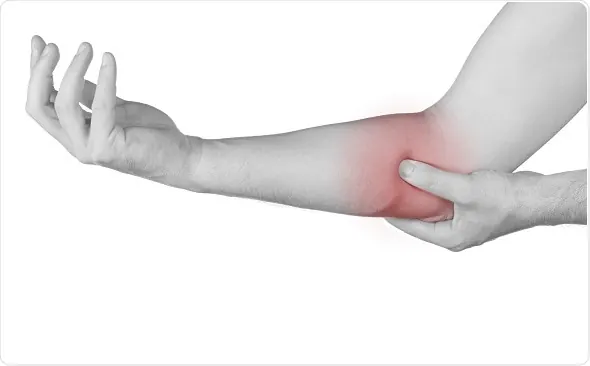
What tennis elbow is
Lateral epicondylitis — commonly known as tennis elbow — is a painful condition involving the tendons that attach to the outer (lateral) part of the elbow. Tendons anchor muscle to bone; the main muscle involved, the extensor carpi radialis brevis, helps extend and stabilise the wrist.
With lateral epicondylitis, the tendon's attachment degenerates over time, weakening the anchor site and placing greater stress on the area. This causes pain during any activity that engages this muscle — particularly lifting, gripping, and grasping. While tennis is the common association, the condition arises with many activities including meat-cutting, plumbing, painting, and weaving.
**Causes:** - **Overuse** — repetitive gripping, grasping, or use of too large a racquet grip - **Trauma** — a direct blow to the elbow causing tendon swelling and degeneration
Most common in people aged 30–50, though it affects both younger and older individuals of either sex.
**Symptoms:** Tenderness and pain over the lateral epicondyle, worse with any gripping or lifting activity. Pain often starts at the elbow and radiates down the forearm to the hand.
Treatment options at Alimran Medical Center
Physiotherapy
- Electrical stimulation
- Short and long wave therapy
- Laser therapy
- Ultrasound therapy
- Therapeutic exercises
Injection therapies
- Corticosteroid injections
- Trigger point injections
- Ozone injection
- Prolotherapy
Advanced therapies
Chiropractic care
Book a consultation
The secretary schedules first appointments during clinic hours; please have prior imaging, operative notes and a current medication list available at the time of the call.
This page provides general information about tennis elbow (lateral epicondylitis) and is not a substitute for individual medical assessment. If your symptoms are severe or worsening, contact a clinician promptly.