At a glance
What it is
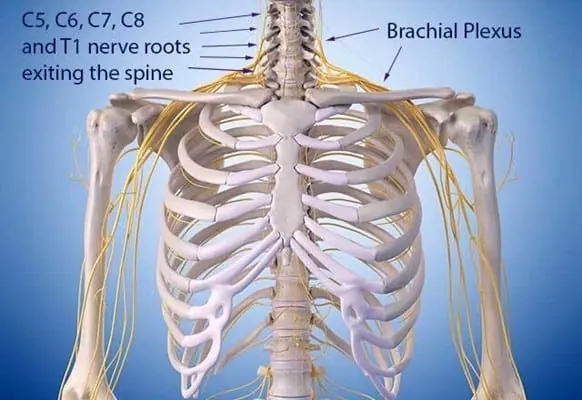
Injury to the brachial plexus — the network of nerves (C5–T1) that controls movement and sensation in the shoulder, arm, and hand. Ranges from mild stretching (neuropraxia) to complete avulsion of nerve roots from the spinal cord.
Symptoms
Numbness, weakness, or paralysis of the arm or hand. Burning or stinging pain ("stingers"). In severe injuries: complete loss of movement and sensation, a limp arm, or severe chronic pain.
Approach
Minor injuries often recover spontaneously. Physiotherapy, neuromodulation, and targeted injections are used for non-surgical cases. Severe nerve ruptures or avulsions may require surgery within 6 months of injury for best results.
What brachial plexus injuries are
The brachial plexus is a network of nerves originating from the cervical and upper thoracic spinal cord (C5–T1). These nerves converge to supply the shoulder, arm, wrist, and hand — controlling both movement (raising the arm, gripping, fine finger movements) and sensation (feeling temperature, pressure, and pain in the arm and hand).
Brachial plexus injuries occur when these nerves are stretched, compressed, torn, or avulsed (ripped away from the spinal cord). Severity varies widely: - **Neuropraxia:** minor stretching with temporary conduction block — usually recovers within weeks - **Axonotmesis:** more severe stretch causing axon damage — recovery possible but slower - **Neurotmesis / avulsion:** complete nerve rupture or root avulsion from the spinal cord — most severe; surgical reconstruction needed
**Causes in adults:** - Blunt trauma (motor vehicle accidents, falls) - Contact sports (football "stingers" — temporary burning/numbness from nerve stretching) - Gunshot wounds - Surgical positioning or injection injury - Tumour invasion or radiation treatment
**Birth injuries:** Occur in 1–2 per 1,000 births. Large babies, breech presentation, prolonged labour, and shoulder dystocia increase risk. - **Erb's palsy** — upper brachial plexus (C5–C6); shoulder/elbow weakness; classic "waiter's tip" posture - **Klumpke's palsy** — lower brachial plexus (C8–T1); hand and wrist weakness; intrinsic hand muscle paralysis
**Symptoms** depend on which roots are injured: - Numbness or loss of sensation in the hand or arm - Inability to control the shoulder, arm, wrist, or hand - Arm hanging limply - Burning, stinging, or severe pain in the shoulder or arm
Mild injuries (neuropraxia) may resolve without treatment. More severe injuries require rehabilitation, and some need surgery — ideally within 6 months of injury, since nerve tissue heals slowly and delayed repair reduces outcomes.
Treatment options at Alimran Medical Center
Neuromodulation
Injection therapies
- Trigger point injections
- Epidural steroid injections
- Ozone injection
- Prolotherapy
Advanced therapies
Physiotherapy & rehabilitation
- Electrical stimulation
- Short and long wave therapy
- Laser therapy
- Ultrasound therapy
- Magnetic therapy
- Strengthening and range-of-motion exercises
- SpineMED® system
- Sigma
Book a consultation
The secretary schedules first appointments during clinic hours; please have prior imaging, operative notes and a current medication list available at the time of the call.
This page provides general information about brachial plexus injuries and is not a substitute for individual medical assessment. If your symptoms are severe or worsening, contact a clinician promptly.